




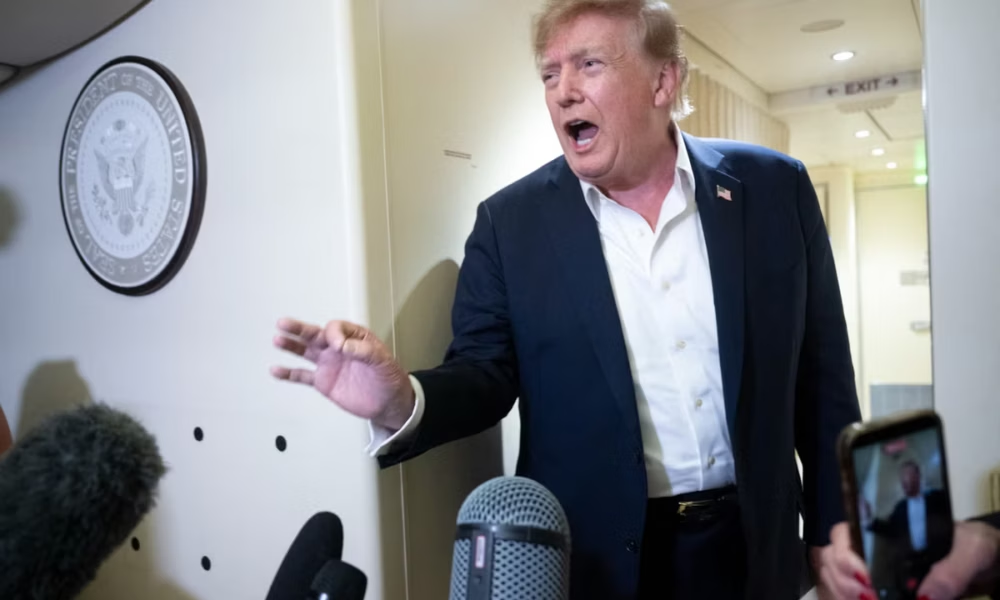

President Donald Trump has signaled a significant retreat on ethics standards as he agrees to a stricter set of oversight measures embedded within a cryptocurrency bill facing a critical Senate vote this week. The shift comes after a coalition of Democrats and Senator Thom Tillis of North Carolina argued that original restrictions were too weak to address potential conflicts of interest tied to the president’s own digital asset holdings. While the initial draft simply prohibited federal officials and their spouses from issuing new digital assets, the updated version introduces much more aggressive transparency requirements.
Central to the dispute was whether state attorneys general should be granted the power to enforce these rules alongside the federal Justice Department. White House insiders privately expressed deep concern that this move could weaponize legal authority, allowing Democratic prosecutors in blue states to target the president or Republican officials, just as GOP counterparts might do to Democrats. Despite these fears, a senior Republican staffer confirmed late Sunday that Trump has embraced roughly eighty percent of the compromise proposed by Senators Tillis and Ruben Gallego.
Under the newly revised terms, government officials will be mandated to either divest from or place into blind trusts any significant financial stakes in companies that launch digital currencies. Furthermore, Trump has accepted provisions that allow state legal officers to take direct action against cryptocurrency exchanges that deal in banned tokens. This concession appears designed to ensure the legislation clears a vital procedural hurdle ahead of Tuesday’s scheduled vote.
White House cryptocurrency adviser Patrick Witt defended the pivot on social media, stating that both the administration and Senate Republicans have remained responsive to Democratic goals throughout the negotiation process. With over a year of debate behind them, proponents of the Clarity Act are now pushing for an immediate bipartisan passage, hoping that these ethical concessions provide enough cover to secure a winning majority in the Senate.