




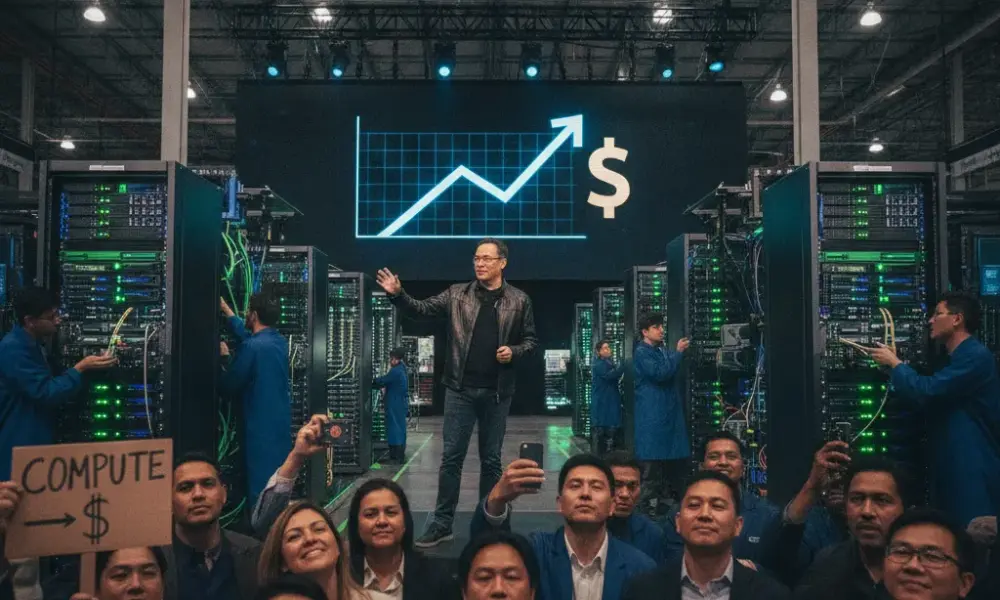

Nvidia has long since evolved from a niche provider of gaming graphics cards into the primary architect of the artificial intelligence era. CEO Jensen Huang recently distilled the company’s current trajectory into a simple mantra, stating that compute is now revenue. This shift toward building entire AI factories—including CPUs, GPUs, and complex networking systems—has rewarded shareholders with astronomical gains. Those who held the stock over the last decade have seen returns exceeding thirteen thousand percent, while more recent investors have watched shares climb steadily toward record highs.
Despite these massive leaps, Wall Street remains remarkably bullish on the chipmaker’s future. Most analysts currently view the stock as a strong buy, with an average price target suggesting nearly forty percent upside from current levels. These optimistic projections are backed by a consistent track record of performance, as Nvidia has beaten earnings expectations for fifteen consecutive quarters. Forecasts for fiscal 2028 suggest revenues could soar to over six hundred eighty billion dollars, driven by a relentless cycle of upward revisions from financial experts who believe the peak is still far off.
The path to reaching a milestone price of four hundred dollars per share depends largely on the successful rollout of the Vera Rubin platform. Management anticipates this will be the fastest product ramp in the company’s history, potentially driving significantly higher revenue per gigawatt than previous generations. Further fuel for this rally includes projected increases in capital expenditure from major cloud providers and new revenue sharing deals that allow Nvidia to profit both from initial hardware sales and ongoing rental income via neocloud partnerships.
Of course, such ambitious growth is not without its risks. Potential headwinds include rising memory costs that could squeeze margins and geopolitical tensions affecting data center revenue in China. Additionally, fluctuations in Treasury yields can often put pressure on high growth stocks. However, given that Nvidia has historically posted annual gains well over one hundred percent during its explosive runs, many observers believe another surge is possible if demand continues to outpace supply and the global appetite for AI infrastructure remains insatiable.