

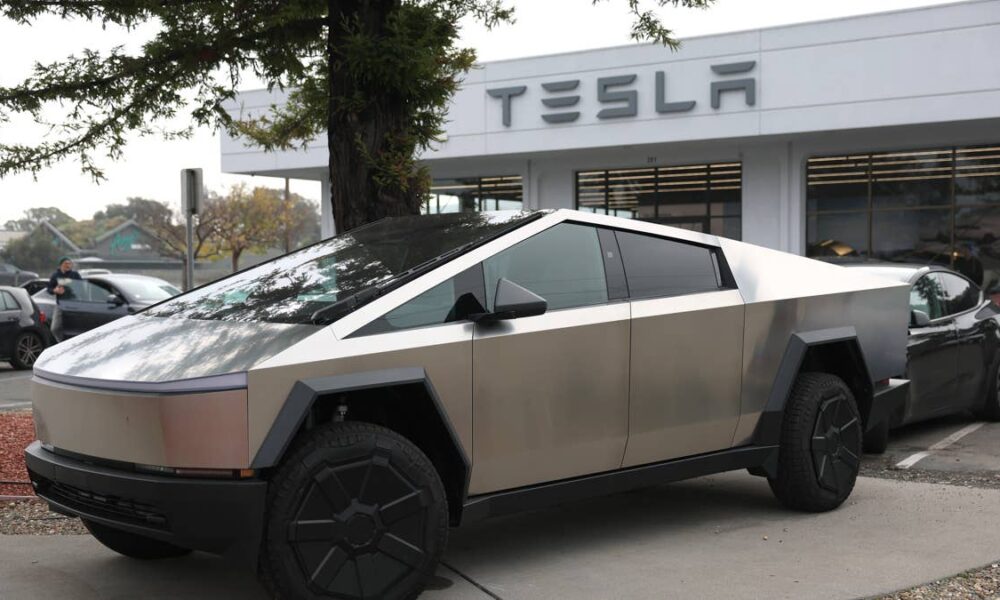

Tesla has spent months pushing employees to use artificial intelligence as aggressively as possible. The company was tracking which engineers consumed the most compute, running internal promotions, and encouraging staff to experiment freely with AI tools. Leadership sent company-wide emails urging workers to try new platforms.
Starting July 6, Tesla is capping each employee’s spending on third-party AI tools at $200 per week, with anything above that requiring manager approval, according to an internal memo first reported by The Information. Some engineers had been running up thousands of dollars in weekly token bills.
Why Tesla reversed course on employee AI spending
Over the past six months, Tesla leadership worked to consolidate employee AI usage onto a company-wide platform with approved models and security policies. Teams built leaderboards ranking staff by token consumption. Musk himself sent a company-wide email encouraging engineers to try Composer, xAI’s coding tool. Heavy usage was the goal, and some teams took that seriously enough to compete over the metric.
When usage-based billing makes the cost of every prompt visible at the individual level, the math changes fast. Some Tesla software engineers were consuming thousands of dollars’ worth of tokens in a single week. That is the kind of number that gets flagged in a finance review quickly. Management decided the spending needed a ceiling.
More Tesla:
- Tesla faces lawsuit from family of victim killed in Texas home crash
- Why a fatal crash threatens Tesla’s stock
- Tesla stock has a SpaceX problem, veteran analyst says
The timing matters. Musk has staked Tesla’s long-term valuation on deploying AI at scale across its Robotaxi network and Optimus humanoid robot. Tesla’s revenue has mostly stalled over the past two years, which puts the AI story under more pressure than most investors appreciate.
The Grok exemption and what it says about Tesla’s AI strategy
The cap does not apply to beta versions of xAI products, including Grok and Composer, xAI’s coding tool. Engineers who run compute-heavy sessions on Claude will burn through their $200 weekly allowance quickly, while Grok and Composer carry no budget counter.
The problem is that Grok has not won over Tesla’s engineering staff. Four people familiar with internal usage told Electrek that employees broadly prefer Anthropic’s Claude for day-to-day development work. The preference held even through a sustained internal promotion campaign that included personal sessions from xAI product leads.
Grok’s track record inside Tesla has been bumpy. Electrek reported last year that Tesla’s Grok in-car integration failed to interface with the vehicle’s own functions: the chatbot could not talk to the car it was embedded in. Musk acknowledged in March 2026 that xAI “was not built right first time around” and that the company was being rebuilt from scratch. That admission came six weeks after Tesla had committed $2 billion of shareholder capital to the venture.
The spending policy may not change which tools engineers actually reach for. A financial penalty on Claude still leaves Grok needing to win on performance, and so far it has not done that either.
Sullivan/Getty Images
Tesla is cutting individual AI spending while tripling corporate AI investment
The $200 cap is easy to misread. At the same time Tesla is limiting individual employee spending, the company has dramatically increased its corporate-level AI investment. Tesla raised its 2026 capital expenditure guidance to over $25 billion, nearly tripling the prior year’s allocation, Seeking Alpha noted. The money is being directed toward computing infrastructure, robotics, and autonomous driving.
Tesla still wants AI at the center of the business. The cap redirects spending rather than cutting it: away from engineers running up bills on third-party tools and toward the infrastructure bets that actually touch the product.
SpaceX, meanwhile, is reportedly preparing to acquire Cursor’s parent company Anysphere in a deal valued at roughly $60 billion, which would fold one of the most widely used AI coding tools directly into the broader Musk ecosystem. If that deal closes, Tesla engineers who reach for Cursor would effectively be using a Musk-owned product. That deal is separate from Tesla’s employee cap, but it adds context to the direction Musk is steering the AI stack across his companies: inward, not outward.
Tesla is not the only company clamping down on employee AI costs
The Uber comparison is the most direct. Uber had encouraged employees to use AI without restrictions, then burned through its entire 2026 AI budget by April and responded with a $1,500 monthly cap per tool per employee. Microsoft canceled Claude Code licenses across its Experiences and Devices division partly due to cost. Meta, Amazon, Walmart, and Coinbase have all introduced similar limits or directed staff toward lower-cost models.
The era some in the industry have started calling “tokenmaxxing,” meaning indiscriminate burning of AI tokens to create an appearance of productivity, appears to be giving way to a phase of active cost metering. On July 1, Palantir CEO Alex Karp appeared on CNBC’s Squawk Box and argued that the token economics underpinning the AI industry have broken down as costs have spiraled.
For Tesla, a $200 weekly cap is a small number against the company’s overall scale. But the speed of the reversal tells investors something useful: the AI spending picture can shift very fast, even inside companies most publicly committed to the technology.
Related: Amazon joins Microsoft in sending shocking message to employees