





Amid a challenging economy, many American consumers are cutting down on luxury-item spending. They might be able to justify a new car, a new TV, or some other purchase that meets a practical need, but it’s hard to make the decision to buy jewelry when you’re worried about your finances.
The change was noticeable during the 2025 holiday season.
“The most striking development is the sharp decline in discretionary spending intentions. Although higher-income consumers are somewhat less affected by this pullback, this trend is observed across all income groups. This underscores a broader, cautious approach to spending as economic pressures continue to shape consumer behavior,” according to data from McKinsey.
In its research, McKinsey showed that 43% of Americans planned to spend less on jewelry during the holiday season.
Analysts note the cautious consumer behavior isn’t limited to one category.
“They are buying less and are cutting back on more discretionary categories,” GlobalData Managing Director Neil Saunders told CBS News, highlighting how broad consumer reticence is shaping retail demand.
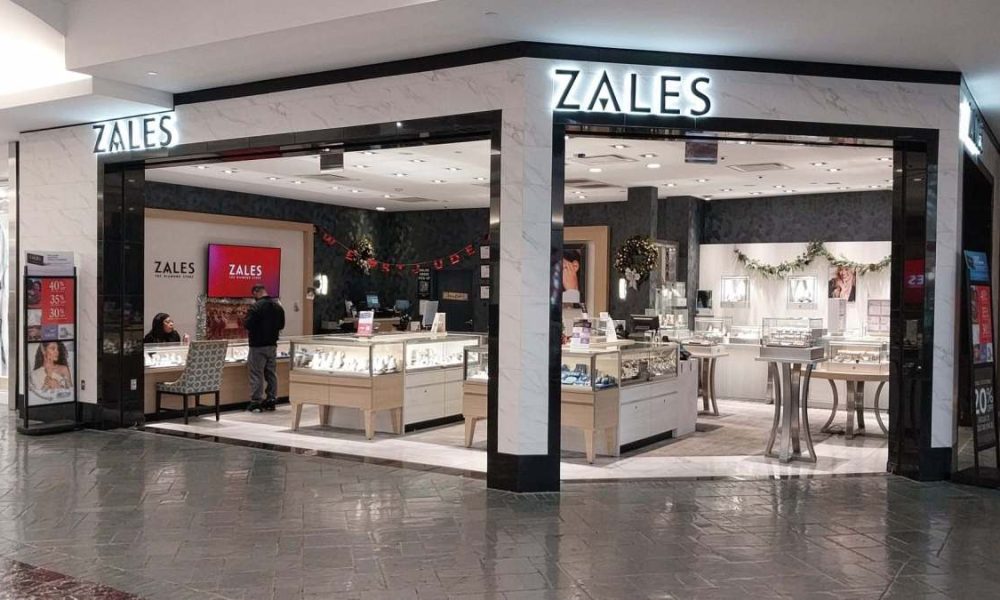
With Americans cutting back on discretionary spending, Signet, which owns multiple jewelry brands including Kay Jewelers, Jared, and Zales, has decided to shrink its store count and eliminate multiple brands.
Signet is a retail jewelry giant
While Signet is not a household name, Kay, Jared, and Zales dominate the mass market jewelry space in the United States.
“Signet Jewelers Limited (SIG) stands as the world’s largest retailer of diamond jewelry, commanding a dominant market position in the highly fragmented U.S. jewelry market. With a portfolio of well-known banners including Kay Jewelers, Zales, and Jared, complemented by a growing digital presence through acquisitions like Blue Nile and JamesAllen.com, the company operates approximately 2,600 stores and generates annual sales of approximately $6.7 billion,” according to Gemini Brief.
The jewelry giant also operates Banter by Piercing Pagoda, Diamonds Direct, Blue Nile, James Allen, Peoples Jewellers, and Rocksbox in the U.S., and H.Samuel and Ernest Jones in the United Kingdom.
Signet closing stores and ending brands
Despite the challenging global economic situation, Signet had a strong 2025, according to its fourth-quarter earnings release. Highlights include:
- Sales of $6.81 billion on a same-store sales increase of 1.3% to FY25
- AUR up approximately 7% to FY25, with growth in both bridal and fashion
- Operating income of $393.1 million, up from $110.7 million in FY25
- Adjusted operating income of $515.0 million, up from $498.1 million in FY25
- Diluted EPS of $7.08, compared to a diluted loss per share of $0.81 in FY25
- Adjusted diluted EPS of $9.60, compared to $8.94 in FY25
Despite those strong results, the company has decided to make some cuts.
“Our revenue guidance assumes approximately 100 store closures, leading to a low-single-digit decline in square footage,” CFO Joan Hilson shared during the company’s Q4 earnings call.
The company will also close one of its brands and make major changes at another.
“To support our growth aspirations for Blue Nile, we will leverage the James Allen brand as a proprietary collection and transition complementary products and styles to the Blue Nile website. Over the second quarter, we will be sunsetting the JamesAllen.com site,” she shared.
Another brand, Rocksbox, will see its operations change as well.
“We also see additional opportunity for other brands within the portfolio to utilize the custom capabilities and technology of James Allen. Further, the Rocksbox private-label fashion assortment will become a distinct proprietary collection within Kay. Rocksbox will operate within the Kay team rather than as a stand-alone brand,” the CFO added.
At the end of January, Signet operated 2,582 locations, including 2,238 in the U.S., 91 in Canada, and 253 internationally, according to its most recent 10-K filing.
Shutterstock
Signet is retrenching, not failing
While many retailers close stores and brands when they’re struggling, Signet is operating from a position of strength.
“We are aligning select brands within our portfolio to prioritize our larger consumer brands and amplify growth opportunities, maximize the benefits of shared resources and expand customer reach, all in an effort to drive sustainable comp performance,” Hilson said.
The company is being cautious, but at the same time adjusting its portfolio to meet the current economy.
Jewelry sales have actually been growing, despite economic pressures.
“The U.S. jewelry market grew a surprising 5% last year, from $81.3 billion in 2023 to $85.4 billion in 2024,” according to the Bureau of Economic Analysis.
Signet, however, forecasts a potential drop in sales from $6.8 billion in 2025 to a low-end of $6.6 billion in 2025, with a high-end of $6.9 billion, according to its earnings release.
Those numbers assume that the economy will remain challenging, which leading analysts expect.
“In the realm of consumer goods, jewelry stands out as the most discretionary purchase. Unlike items such as clothing, handbags, or watches, which serve functional purposes, jewelry is purchased purely for its emotional or symbolic value and has not practical use. This means jewelry, regardless of its cost or brand, is the most luxurious of all consumer goods,” Pamela Danzinger reported at Forbes.