




Why Does USDe’s Aladdin Support Matter?
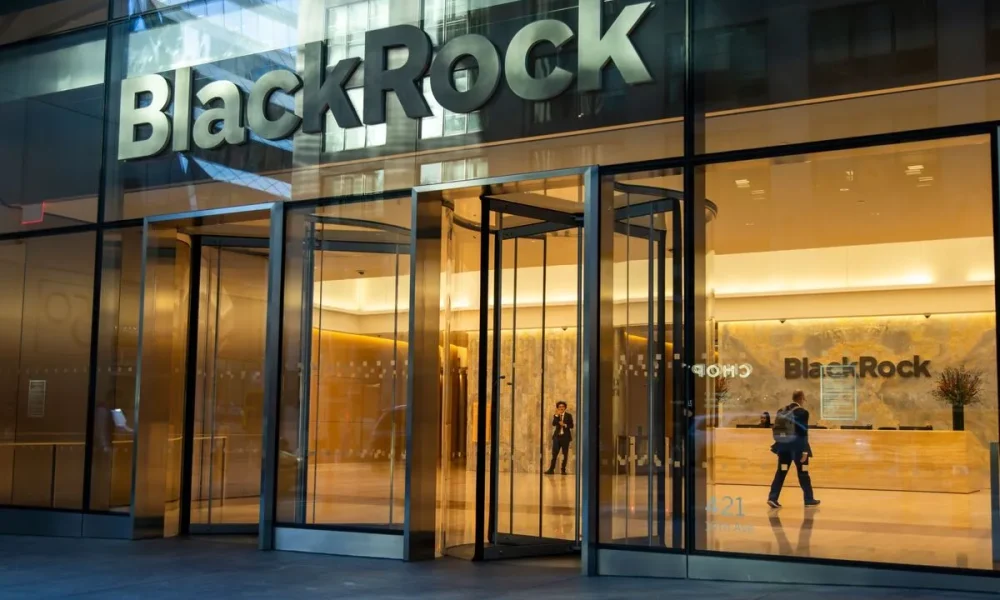
Ethena’s USDe is becoming a supported cryptocurrency on Aladdin, BlackRock’s enterprise investment and portfolio management platform, giving institutional users a new route to interact with digital dollar infrastructure through a system already embedded in traditional finance workflows.
The move is part of a deeper collaboration between BlackRock and Ethena Labs, aimed at expanding institutional access to Ethena’s products and improving liquidity around BlackRock’s USD Institutional Digital Liquidity Fund, known as BUIDL.
The companies said the agreement is designed to “advance institutional adoption of digital dollar infrastructure and the interoperability of digital dollars with tokenized financial assets.” That language points to the broader direction of the deal. The focus is not simply adding another crypto asset to an institutional platform. It is about making tokenized money market products, stablecoins, and synthetic dollar assets easier to move between onchain and traditional portfolio systems.
Aladdin is used by banks, insurers, pension funds, asset managers, and other institutional investors to track portfolios, manage risk, and support investment operations. Adding USDe to that environment gives Ethena greater visibility inside the systems where institutional allocation decisions are reviewed and managed.
How Does The BUIDL Liquidity Facility Work?
As part of the agreement, Ethena will support a $100 million liquidity facility through Securitize, the tokenization platform and regulated transfer agent for BUIDL. The facility is intended to make it easier for eligible BUIDL clients to exchange BUIDL tokens for USDC, USDtb, and other supported stablecoins.
Clients will also be able to convert those stablecoins back into BUIDL outside normal market hours. That is an important operational change because tokenized assets are often promoted as 24-hour infrastructure, while the underlying financial products they represent can still carry traditional market-hour limitations.
BlackRock’s global head of digital assets Robert Mitchnick said, “In the case of tokenized treasury funds in particular, this liquidity facility enables a level of frictionless interoperability that is core to the unique utility that tokenizing treasury funds makes possible.”
The statement reflects the practical case for tokenized Treasury funds. Their value depends not only on yield or brand recognition, but also on whether institutions can move in and out of them efficiently across digital settlement environments.
Investor Takeaway
The deal strengthens the bridge between tokenized Treasury products and digital dollar liquidity. For institutions, the key development is not only USDe support, but the ability to move between BUIDL, stablecoins, and tokenized cash-like instruments with fewer operational frictions.
Why Is Ethena Becoming More Relevant To Institutions?
Ethena’s USDe differs from traditional stablecoins such as USDC and USDT. Those tokens are backed by highly liquid fiat-based reserves, while USDe is a synthetic dollar designed to offer yield potential through Ethena’s structure.
That distinction makes USDe both attractive and more complex for institutional users. It can serve as a yield-bearing digital dollar instrument, but it also requires institutions to understand its collateral, hedging, liquidity, and risk-management model. Integration with familiar systems such as Aladdin could help reduce operational barriers for institutions that are not ready to manage exposure only through native crypto interfaces.
Ethena founder Guy Young said, “The next phase of digital asset adoption will be driven by infrastructure that allows traditional institutions to interact with onchain financial products through familiar systems and workflows.”
That is the core strategic point. Institutional crypto adoption is increasingly being shaped by infrastructure rather than only asset performance. Banks, asset managers, and treasury desks need reporting, risk controls, settlement clarity, and liquidity access before they can use tokenized products at scale.
Ethena has also been expanding its institutional footprint through other partnerships and investments. Asset manager Janus Henderson recently made a strategic investment in ENA and planned to use USDe for treasury management while exploring distribution routes through exchange-traded products. Ethena has also announced plans to allocate $250 million to Securitize’s tokenized AAA-rated collateralized loan obligation fund, increasing its exposure to tokenized credit markets.
What Does This Say About Tokenized Real-World Assets?
The BlackRock-Ethena collaboration adds to a wider push by global asset managers and decentralized finance protocols to bring tokenized real-world assets into more usable institutional channels.
BUIDL, launched in 2024 on Ethereum, is one of the largest tokenized U.S. Treasury funds. Tokenized Treasurys account for nearly half of the onchain real-world asset market, with about $15 billion represented onchain, according to RWA.xyz. BUIDL itself has roughly $3 billion in total value locked, according to DeFi Llama data.
BlackRock and Ethena already had a relationship through USDtb, an Ethena stablecoin issued by Anchorage Digital Bank and backed primarily by BUIDL. A year ago, Ethena and Securitize enabled round-the-clock atomic transfers between BUIDL and USDtb. The new agreement extends that structure by adding a larger liquidity facility and placing USDe into a broader institutional workflow.
The market reaction showed how investors viewed the announcement. Ethena’s governance token ENA rose about 8% on the day as traders responded to another high-profile institutional partnership.
Investor Takeaway
Tokenized Treasury funds are moving from proof-of-concept products toward liquidity infrastructure. The next competitive layer is interoperability: which issuers can make tokenized cash, stablecoins, and synthetic dollar assets usable inside institutional systems.
What Are The Implications For Digital Dollar Infrastructure?
The agreement shows that digital dollar infrastructure is becoming a strategic focus for both traditional asset managers and crypto-native issuers. Stablecoins, synthetic dollars, and tokenized Treasury funds are increasingly being treated as connected parts of the same market rather than separate product categories.
For BlackRock, the deal can increase the usefulness of BUIDL by improving liquidity pathways and linking the fund to more digital settlement instruments. For Ethena, Aladdin support gives USDe a stronger institutional access point and reinforces its effort to move beyond crypto-native DeFi users.
The main question is how institutions will assess the risk differences between tokenized Treasury funds, fiat-backed stablecoins, and synthetic dollar products. They may all serve digital dollar functions, but they do not carry the same structure, liquidity profile, or risk model.
That distinction will matter as tokenized finance grows. The BlackRock-Ethena arrangement gives institutions more tools to move between onchain products, but it also makes due diligence more important. Digital dollar infrastructure is becoming more interoperable, and that makes the quality of reserves, settlement design, and liquidity controls central to institutional adoption.